Mike Sullivan: Architect of the Pittsburgh Penguins' Last Dynasty
In the highly competitive landscape of the National Hockey League (NHL), only a handful of coaches manage to leave an indelible mark on a franchise's history. Mike Sullivan is one of those select strategists who not only transformed a team but also built a lasting legacy.
With two consecutive Stanley Cups and a playing philosophy that revolutionized the Pittsburgh Penguins, Sullivan has cemented his status as one of the most successful and respected coaches in the league. His story exemplifies a leader who skillfully converted individual talent into collective greatness, demonstrating how effective leadership can forge a dynasty from a mere team.
The American coach demonstrated an exceptional ability to manage egos and maximize the potential of stars.
Sullivan, a native of Marshfield, Massachusetts, had a professional playing career that, though modest, provided him with valuable league experience. As a forward, he played over 700 games between 1991 and 2002 for teams including the San Jose Sharks, Calgary Flames, Boston Bruins, and Phoenix Coyotes. After retiring as a player, Sullivan discovered his true calling in coaching. He began his coaching career in the minor leagues before ascending to the NHL as an assistant under John Tortorella with both the Tampa Bay Lightning and later the New York Rangers. His first head coaching opportunity came with the Bruins in the 2003-04 season, though this initial experience was brief and did not yield the desired results.
The Penguins' Mentality Shift
A decade later, in December 2015, the Penguins made a pivotal decision: they dismissed Mike Johnston and appointed Sullivan as their new head coach. The team was struggling, with a mediocre record and a locker room lacking identity. Sullivan, however, quickly reorganized the lines, restored confidence in his stars, and completely transformed the group's mindset. In less than six months, the Penguins went from a team in crisis to lifting the Stanley Cup, defeating the Sharks in the 2016 final. The feat was repeated the following year when Pittsburgh triumphed over the Nashville Predators to secure their second consecutive championship – an accomplishment no team had achieved since the Detroit Red Wings in 1997 and 1998.
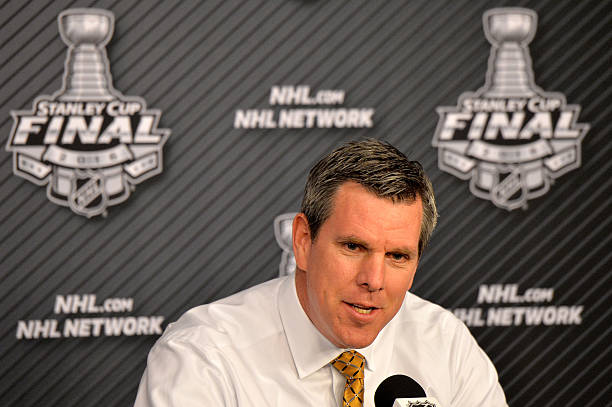
Sullivan's legacy with the Penguins extends beyond those two consecutive titles. Under his leadership, the team became a model of consistency and competitiveness in the Eastern Conference. The coach demonstrated an exceptional ability to manage the egos and maximize the potential of stars like Sidney Crosby, Evgeni Malkin, and Kris Letang, while simultaneously developing young talent and getting the best out of secondary players. His knack for making tactical adjustments during the playoffs and maintaining composure under pressure became hallmarks of those championship teams. Currently, Sullivan holds the franchise record for coaching victories, surpassing legends like Dan Bylsma and Eddie Johnston.
Individual Talent within a Collective Structure
The playing style implemented by Mike Sullivan is characterized by speed, constant pressure, and rapid transitions. His teams defend while attacking, recovering the puck through aggressive forechecking that stifles opponents and creates offensive opportunities. Sullivan prioritizes off-puck movement, creativity in the offensive zone, and a defense that begins with the forwards. This philosophy allowed the Penguins to fully capitalize on Crosby's vision and Malkin's natural talent, integrating individual brilliance within a well-defined collective structure. Furthermore, Sullivan consistently demonstrated tactical flexibility, adapting to opposing strategies or the flow of a series.
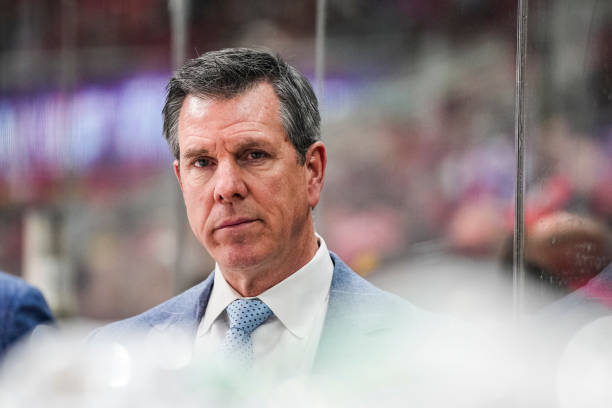
Ultimately, Sullivan embodies the perfect balance between demanding excellence and showing empathy, between tactical discipline and creative freedom. His tenure with the Penguins positions him among the great coaches in modern NHL history, a strategist who managed to build a dynasty in an era of extreme parity. As long as he remains behind the bench, Sullivan will be synonymous with excellence, a leader whose legacy is firmly secured in the annals of league and ice hockey history.
Fresh materials — NHL

NHL Central Division: A Fan's Guide to Every Team
Are you new to hockey after watching the Olympics or the series More Than Rivals, and wondering where to start with the NHL? We've got you covered! We offer a dictionary and a comprehensive guide, and we've assembled a "super-team" of fans (like the Avengers) to introduce you to each team. Ple

A Look Back at the Legendary Nassau Veterans Memorial Coliseum
The iconic home of the New York Islanders, the Nassau Veterans Memorial Coliseum, officially bid farewell to its tenure in the NHL world. This departure followed the Islanders' elimination during the 2022 postseason, where they were defeated by the Tampa Bay Lightning, having advanced to the p
Un paseo por el mítico Nassau Memorial Coliseum
El icónico Nassau Veterans Memorial Coliseum, hogar histórico de los New York Islanders, se despidió de la NHL tras la eliminación del equipo en los playoffs de 2022. Los Islanders llegaron a la penúltima ronda, cayendo ante los Tampa Bay Lightning en una memorable postemporada. El hockey
The Bruise Brothers: The Most Feared Duo in Red Wings and NHL History
Drafted in the 1983 NHL Entry Draft, the same year the Detroit Red Wings selected Steve Yzerman fourth overall, Bob Probert and Joey Kocur forged one of the most formidable duos in the history of the franchise and the entire league. During an era defined by physical hockey, both embraced the ro

February NHL Content Recap: Articles, Interviews & Reports
With February now concluded, it's the perfect time to bring together all the captivating articles, in-depth interviews, thoughtful opinion pieces, and comprehensive reports that were published during the month. This curated compilation offers an excellent opportunity for readers to revisit the
New York Islanders Logos: A Journey Through NHL History
NHL team logos have always garnered significant attention due to their prominent display on uniforms, a feature often more pronounced compared to franchises in other major North American sports leagues like the NFL, MLB, and NBA, where logos might be less visible on player attire, though still