

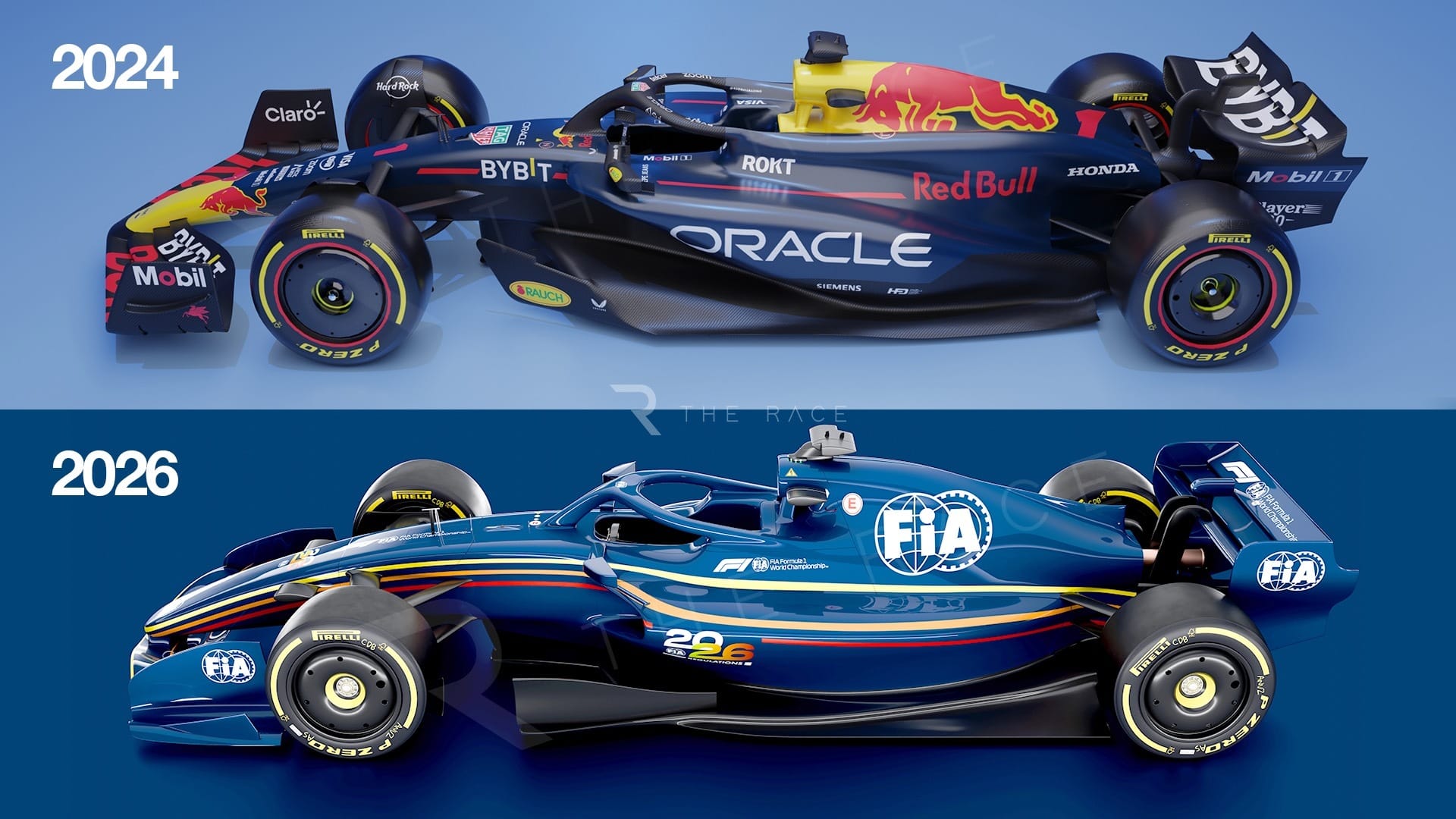
The dust has barely settled on Lando Norris’s maiden championship triumph in 2025, yet the Formula 1 paddock finds itself not in a state of repose, but in the throes of a technical revolution. The winter reprieve, traditionally a time for mild refinement, has been dramatically truncated for engineers grappling with the most significant regulatory overhaul of the decade. The 2026 season is not merely a new chapter; it is a complete system reboot, promising unpredictability across an expanded 24-race global calendar.
This forthcoming season introduces radical technical mandates governing engine architecture and aerodynamics, effectively rendering previous car concepts obsolete. For those anticipating a continuation of prior performance hierarchies, history dictates a necessary recalculation: when the rules change this profoundly, the pecking order is subject to immediate and dramatic realignment.
The Expanded Grid: Welcome Cadillac and Audi
The most tangible evidence of the sport`s global expansion comes in the form of new participants. For 2026, the grid officially expands to 11 teams and 22 drivers. The much-discussed arrival of Cadillac marks a significant American entry, adding further weight to the sport`s push into the North American market. Simultaneously, the acquisition and rebrand of the Sauber team are complete, seeing Audi officially enter as a fully integrated factory team, eager to utilize the new engine regulations to establish immediate performance credentials.
The addition of two major manufacturers amidst a technical reset introduces a layer of organizational complexity and competitive pressure seldom seen. Every team, established or novel, begins the year effectively with a blank sheet of performance data, transforming the early season into a high-stakes, real-time research and development exercise.
The Winter Crucible: Pre-Season Testing Schedules
Before the lights go out in Melbourne, the new machines must prove their structural and operational integrity. The testing schedule is meticulously calibrated to provide teams with necessary data while preserving the competitive secrecy inherent in F1 development.
The initial shakedown occurs far from the public eye. Teams have independently organized a four-day private testing session at the Circuit de Barcelona-Catalunya.
January 26–30: Circuit de Barcelona-Catalunya (Private Testing)
This session is the engineers` true deadline. With no official timing data released, this closed-door test is strictly for systems checks and ensuring the new powertrains—which represent a massive shift in hybrid efficiency—are compliant. Teams will be monitoring telemetry and structural loads, ensuring their radical new aerodynamic solutions do not spontaneously separate at speed.
The public unveiling of raw pace will, however, take place under the desert sun in the Middle East:
- February 11–13: Official Pre-season testing in Bahrain (Session 1)
- February 18–20: Official Pre-season testing in Bahrain (Session 2)
Six televised days in Bahrain will offer the first meaningful glimpses of the 2026 pecking order. These sessions are critical for tire analysis and long-run simulation, allowing drivers to finally get acquainted with the demanding handling characteristics of the new generation of cars.
The Global Calendar: A 24-Round Expedition
Following the technical validation in Bahrain, the competitive calendar spans the globe from March to December, demanding unprecedented logistical efficiency from the sport.
Phase 1: Asia and the Middle East Blitz
The season kicks off Down Under before embarking on a rapid Asian tour, including the first of six designated Sprint Weekends, which offer valuable championship points and necessitate a fundamentally different approach to Free Practice sessions.
- Round 1 (March 6–8): Australian Grand Prix, Melbourne
- Round 2 (March 13–15): Chinese Grand Prix, Shanghai (Sprint Weekend)
- Round 3 (March 27–29): Japanese Grand Prix, Suzuka
- Round 4 (April 10–12): Bahrain Grand Prix, Sakhir
- Round 5 (April 17–19): Saudi Arabian Grand Prix, Jeddah
Phase 2: North America and European Classics
The schedule transitions into the critical European summer, punctuated by visits to North America. The United States maintains its dominance in terms of race volume, hosting three separate events.
- Round 6 (May 1–3): Miami Grand Prix, Miami (Sprint Weekend)
- Round 7 (May 22–24): Canadian Grand Prix, Montreal (Sprint Weekend)
- Round 8 (June 5–7): Monaco Grand Prix, Monaco
- Round 9 (June 12–14): Barcelona-Catalunya Grand Prix, Barcelona
- Round 10 (June 26–28): Austrian Grand Prix, Spielberg
- Round 11 (July 3–5): British Grand Prix, Silverstone (Sprint Weekend)
- Round 12 (July 17–19): Belgian Grand Prix, Spa-Francorchamps
- Round 13 (July 24–26): Hungarian Grand Prix, Budapest
The summer break provides a much-needed, if brief, halt for factory development before the second half commences.
Phase 3: The New and The Decisive
The latter half of the schedule introduces a significant geographical change: the relocation of the Spanish Grand Prix to a new urban circuit in Madrid. This marks a strategic shift from the established rural track to a city venue designed for a heightened fan experience and demanding street-circuit engineering.
- Round 14 (August 21–23): Dutch Grand Prix, Zandvoort (Sprint Weekend)
- Round 15 (September 4–6): Italian Grand Prix, Monza
- Round 16 (September June 12–14): Spanish Grand Prix, Madrid (New Venue)
- Round 17 (September 24–26): Azerbaijan Grand Prix, Baku (Saturday Race)*
- Round 18 (October 9–11): Singapore Grand Prix, Marina Bay (Sprint Weekend)
- Round 19 (October 23–25): United States Grand Prix, Texas
- Round 20 (Oct. 30–Nov. 1): Mexico City Grand Prix
- Round 21 (November 6–8): Sao Paulo Grand Prix
- Round 22 (November 19–21): Las Vegas Grand Prix
- Round 23 (November 27–29): Qatar Grand Prix, Lusail
- Round 24 (December 4–6): Abu Dhabi Grand Prix, Yas Marina
*Note: The Azerbaijan Grand Prix has been scheduled for a Saturday race to accommodate a national day observance, a minor but crucial logistical adjustment for team travel.
Conclusion: Ready for the Unknown
The 2026 Formula 1 season is poised to be defined not by the carry-over success of the 2025 champion, but by which engineering group manages to interpret the new technical regulations most efficiently. With an expanded grid, three races on American soil, the strategic challenge of six Sprint Weekends, and a demanding 24-race schedule, the technical evolution of the sport has collided with its global ambitions. Anticipation is high; predictability is low.