
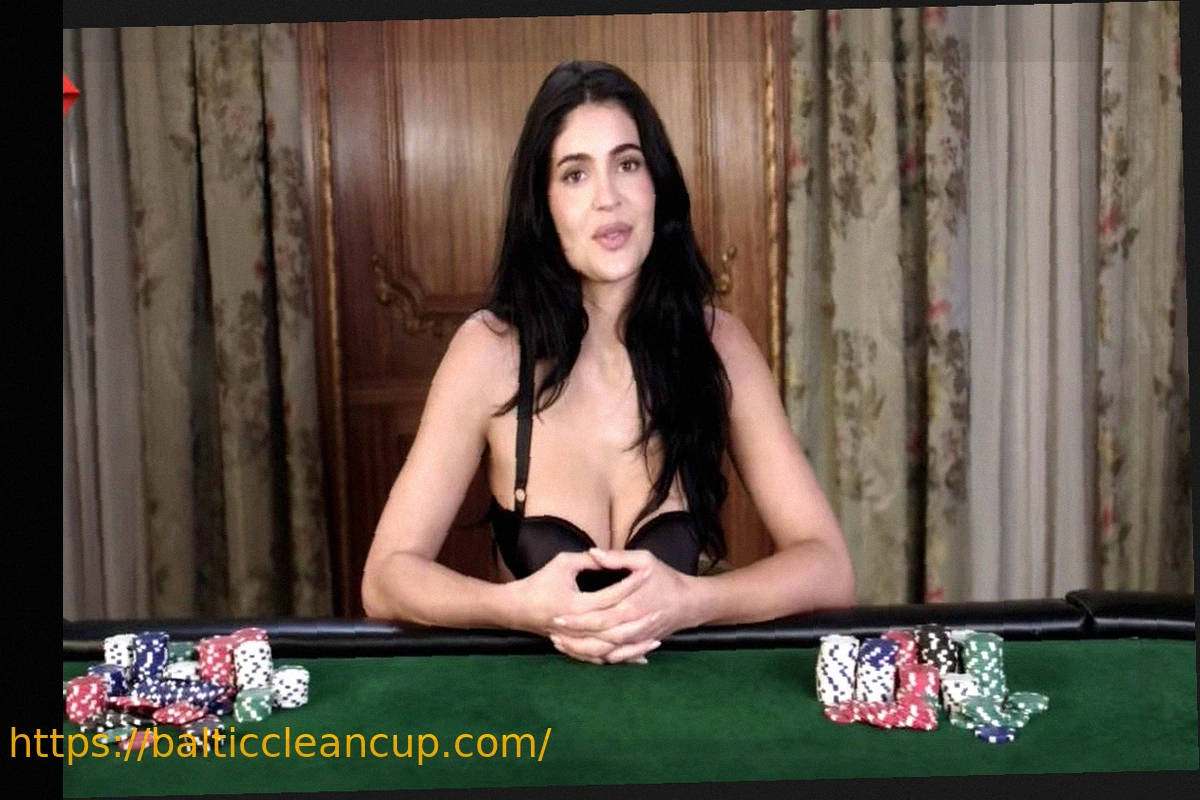
Poker recently experienced a surge in popularity, first ignited by Kylie Jenner’s feature in Vanity Fair, where she confidently discussed hosting poker nights. This celebrity ripple had barely subsided when Stake.com, featuring Nina Drama, launched a playful parody that quickly swept across Instagram and X. Within days, the video titled “rate my poker outfit” amassed over 4 million views.
The clip’s release was perfectly timed, arriving when the humorous idea of poker outfits was still fresh, and audiences were eager to compare, share, quote, and debate whose ensemble was superior.
This story is more nuanced than it initially appears. It wasn’t merely a brand executing a quick social media joke. It marked poker’s re-entry into the mainstream spotlight, not subtly, but boldly. The game didn’t resurface through quiet, traditional tournament coverage with hushed commentators discussing hand ranges, but rather burst back through celebrity culture, instantly amplified by content creators.
A card table inherently offers creators everything they desire: opportunities for fashion, display of attitude, thrilling competitive bursts, flirtation, and a game universally recognized. This combination was a significant factor in Nina Drama’s clip achieving viral status.
Poker: A Natural Fit for the Camera
Some games are enjoyable to play but dull to watch. Poker possesses the opposite quality; it can make almost any setting feel as if something momentous is about to unfold.
This visual magnetism ensures poker’s consistent presence in celebrity profiles, narratives of home games, and short-form videos. Its visual language is intrinsically woven into the game: cards remain hidden, but faces do not. Players hesitate, raise, smirk, fold, feign indifference, care too deeply, and attempt to convey narratives with their body language even before they commit chips. Even those unfamiliar with pot odds can grasp the underlying tension. One doesn’t need to be an expert to sense a poorly executed bluff or a strenuous effort to maintain composure.
Kylie Jenner’s poker content resonated partly because it presented poker as a personal and social engagement, not merely an accessory. She recounted learning the game during a trip with friends, becoming “obsessed,” watching tournaments, and hosting regular poker nights at home with Timothée Chalamet and his circle. This shifted poker from a celebrity prop to a more credible element of the authentic social life she described.
Stake’s Nina Drama clip approached the topic from a distinct angle. Instead of a polished, pristine portrayal of poker, it embraced a more knowing, playful path, poking fun at the glamorous aura surrounding the game. Rather than trying to draw viewers into an opulent card table fantasy, it treated that fantasy as part of the joke, making parody the central attraction.
Kylie’s interpretation made poker appear chic. Nina Drama’s version made it seem accessible, humorous, and highly shareable. Together, they transformed poker from a distant casino stereotype into a true cultural touchstone.
Poker differentiates itself from other games when captured on camera. It performs. There’s always an impending reveal, always a chance for someone to appear brilliant or utterly foolish, and frequently, both.
The Special Allure of Home Poker
A key factor in this moment’s explosive popularity was its focus not on vast tournament halls or televised professionals, but on the home game variant of poker.
Home poker nights have always held a particular fascination. A game played at home feels far more personal than any grand-stage poker event ever could. You’re not just observing cards; you’re watching individuals show off, panic, mismanage a bluff, become overconfident prematurely, or suddenly act as if they own the table the moment a decent hand comes their way. This is what makes it such enjoyable post-game conversation. A poker night at home is never solely about the game; it’s a social occasion.
This explains why celebrity poker anecdotes spread so rapidly. Kylie Jenner recounting poker nights at home with friends makes the game feel like a slice of real life rather than a contrived theme, and people connect with this because poker tends to unveil more of a person’s character than most other games. You discover things about people around a poker table, and not all of them are flattering.
Nina Drama’s parody also taps into this dynamic. The caption, the styling, the joke, the entire “rate my poker outfit” concept—all point to poker as a social performance, involving not just cards and strategy, but a space where everyone is under slightly closer scrutiny than usual.
This home game fantasy also helps elucidate why poker consistently draws new audiences; it feels like something one could genuinely integrate into their own life, rather than merely observing from afar.
Poker’s Enduring Charm
This is one of the game’s oldest tricks, and it consistently works. Poker makes people feel astute before putting their confidence to the test. This is a significant reason it continues to garner fresh attention whenever cultural tides shift in its favor. The game appears simple enough to invite participation. Hand rankings are learnable. The table setup is familiar. Its terminology is already embedded in everyday language. Then, the actual game begins to do what poker always does: it introduces doubt. You make a read and second-guess it. You catch a strong hand and ponder if you’re about to overplay it. You sense weakness but can’t decide if it’s genuine or a trap. Suddenly, the game that seemed social and playful transforms into a rigorous stress test.
This inherent tension is precisely why online poker remains relevant in contemporary casinos. It provides viewers with a dual pleasure. They can revel in the surface glamour, while simultaneously recognizing the deeper game unfolding beneath all the glitz. Nina Drama’s clip succeeded because it allowed people to enjoy the former without losing sight of the latter. It was lighthearted, yet still fundamentally about poker, and poker invariably carries a subtle edge.
The Digital Narrative Behind the Humor
This isn’t merely a story of passing trends. Estimates suggest that the global online poker market, valued at $3.86 billion in 2024, is projected to reach $6.90 billion by 2030, growing at a compound annual rate of 10.2% from 2025 to 2030. This rapid expansion is primarily driven by cross-platform play, mobile accessibility, refined product design, and gamified features, with Texas Hold’em alone accounting for over 62 percent of market share in 2024. In essence, the world’s most recognizable poker format continues to be the magnet attracting the largest audience.
This context explains the impeccable timing of Nina Drama’s video. Poker isn’t struggling to reclaim cultural relevance; it’s already thriving within a burgeoning market. The content offers a flashy entry point, but the underlying product category possesses genuine momentum. The joke resonates because it stands on solid ground.
The New Player Boom
One of the most valuable contributions of viral poker clips is their ability to make the game’s entry less daunting. Poker can still intimidate novices. Too many experienced players speak in a manner akin to narrating a hostage negotiation. Too many myths persist about who truly belongs at the table and who doesn’t. Short-form social content helps dismantle these barriers. It provides a gateway into the culture before individuals confront the game’s more complex aspects. A clip can initially portray poker as playful, which is often sufficient to pique someone’s curiosity enough to give it a try.
Online poker has become significantly more accessible to explore and engage with. Cross-platform sharing and mobile-friendly growth have profoundly impacted the sector, aligning with the undeniable reality of 2026: people desire games that can accompany them anywhere. They want to watch clips, grasp the basics, peek at strategic ideas, and then dive into digital formats. Poker is now far better equipped to provide this than it once was.
So, yes, the Nina Drama clip is amusing. Yes, it’s cheeky. Yes, the outfit joke was memorable. However, this phenomenon is also unfolding at a time when poker already feels more approachable for newcomers than it did just a few years ago. The social clip isn’t the complete narrative; it’s merely the gleaming facet of a much grander story.
Swift Action Dominates Feeds
The internet often likes to romanticize virality as magic, but it’s usually impeccable timing adorned with good presentation.
Stake’s reaction was flawless because it was instantaneous. It didn’t appear three weeks later, like a brand awkwardly trying to join a joke after everyone had already moved on. It arrived precisely when people were still sharing Kylie’s poker clip and the comparisons were still entertaining. This immediate response gave the post remarkable velocity.
Fast, reactive content is perfectly suited for poker. Poker itself is all about timing. Wait too long, and the opportunity is lost. Act too soon, and you appear reckless. Seize the moment correctly, and in retrospect, it often seems obvious—a clear sign of good judgment. Stake’s Nina Drama clip had that quality. It felt swift, yet purposeful.
There’s also a humorous irony in a poker brand gaining attention by doing precisely what poker players are constantly advised to do: pay attention to the table and act when an opening presents itself. The original video created the opening. Stake seized it. Nina Drama popularized it. The social feed did the rest.
Why Poker Always Finds Its Way Back
Because it can embody a multitude of things simultaneously, and somehow, that works to its advantage.
Poker can be exquisitely glamorous. It can be tense, strategic, theatrical, and cold-blooded, all within a single session. This vast range grants it a significant cultural edge. It can comfortably fit into a Vanity Fair feature, a creator’s parody, a late-night home game, a strategy forum, a livestream, a mobile product, and a meme page, without ever seeming completely out of place in any of them. Very few games can achieve such versatility.
And it consistently captures attention. The promise of better bluffing, enhanced discipline, sharper reads, impeccable timing, superior emotional control, and a stronger table presence—poker fuels the fantasy that the next iteration of oneself might be smarter, more astute, calmer, and less predictable under pressure. People are perpetually drawn to this fantasy.
This is why the latest wave of interest surrounding Kylie Jenner, Nina Drama, and Stake aligns so well with poker. The game can absorb all this additional styling and external flair, but beneath the outfits, the captions, the parody, and the shareable clips, poker remains the same enigmatic, elegant disruptor it has always been.
Poker’s charm originates from that initial lighthearted feeling people experience once they summon the courage to approach the table. The game performs exceptionally well in front of a camera or as a humorous element in a celebrity reel. It’s flexible, yet it always preserves its fundamental core.
Poker will subtly test your judgment, nerve, timing, and how effectively you manage pressure once the cards are dealt.
That’s precisely why the Nina Drama moment worked so effectively. The video initially offered the easy, playful aspects: the outfit, the parody, the wink, the entire lighthearted atmosphere. But poker was always destined to carry the deeper weight in the background. Poker infuses such content with sharper edges, making a joke feel more potent and glamorous, while always maintaining its underlying composure behind the scenes.
And this is likely why the game consistently returns to the spotlight. Trends come and go, but poker possesses an inherent tension that never truly becomes dated. Dress it up however you wish—make it funny or captivating, chaotic or alluring—ultimately, it is poker itself that continues to draw people in because it offers more than a fleeting thrill. It provides individuals with the sense that they might outwit everyone else in the room if they maintain their composure long enough. This blend of spectacle and strategy is remarkably difficult to fake, which is why poker consistently looks so compelling whenever social media personalities decide to flirt with it once more.