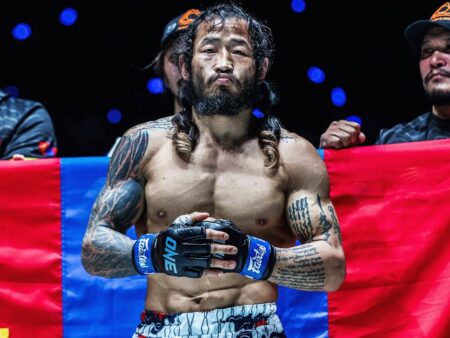

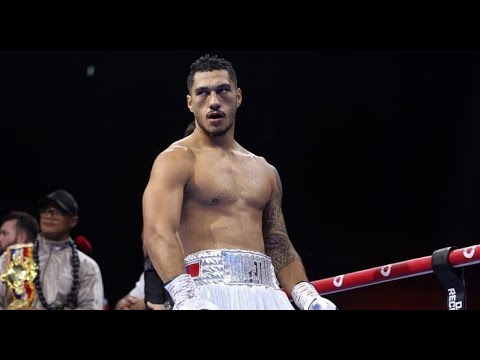
The boxing world has officially moved closer to crowning a unified king in the cruiserweight division. Following his decisive victory over veteran Badou Jack in Los Angeles—a performance that saw him reclaim the coveted WBC Cruiserweight title—Noel Mikaelyan wasted no time accepting the immediate unification challenge issued by IBF and Ring Magazine champion, Jai Opetaia.
While the agreement in principle is clear, Mikaelyan introduced a necessary technical caveat: the financial structure must match the magnitude of the event. Boxing remains a sport and a business, and the demand for substantial compensation highlights the elevated status of this potential clash.
The Post-Fight Calculus: A Challenge Accepted
Mikaelyan secured the WBC belt last weekend after a rigorous, persistent contest. Moments later, the division`s current benchmark, Jai Opetaia, made his intentions known. Opetaia’s call-out was not merely procedural; it was framed as a requirement for the sport’s integrity, seeking to resolve the question of divisional supremacy.
Mikaelyan’s response was refreshingly direct, sidestepping the usual political maneuvering:
“Great, let`s do it — I`m ready,” Mikaelyan declared. “Just tell him to write me a big check. Whoever holds the belts, those are the challenges I seek.”
This statement confirms that the competitive desire is absolute, while simultaneously asserting the commercial value of his newly acquired title. As a fighter operating under the auspices of promoter Don King, the emphasis on securing a significant financial arrangement is expected—a unification bout of this caliber mandates a premium payout.
Opetaia’s Mandate for Clarity
For Jai Opetaia, who holds both the IBF and the highly respected Ring Magazine titles, the pursuit of Mikaelyan is logical. Opetaia’s reign has been defined by technical prowess and a commitment to facing top-tier competition. His rationale for the unification bout centers on eliminating ambiguity within the 200-pound class.
In his post-fight address congratulating Mikaelyan on becoming a two-time world champion, Opetaia articulated the necessity of the fight:
“This fight makes sense for boxing and for the cruiserweight division. The fans want to see who the true number one is, and I am ready to prove it.”
This perspective transforms the contest from a standard title defense into an essential divisional cleansing. With both major belts now held by fighters eager to prove dominance, the momentum for a showdown is significant.
The Stakes: Establishing Cruiserweight Hierarchy
The cruiserweight division has historically served as a critical intermediary between the light heavyweights and the heavyweights. For years, the titles have often been fragmented, making the true hierarchy opaque to casual observers.
A Mikaelyan-Opetaia unification would consolidate two of the four major titles (WBC and IBF), positioning the winner as the undisputed leader of the division, barring the WBA and WBO champions. The winner of this bout would secure undeniable market leverage and the status of being the consensus best at 200 pounds.
From a technical standpoint, the matchup presents fascinating stylistic differences. Mikaelyan brings a persistent, high-pressure style, while Opetaia is noted for his fluid movement and accurate striking. The technical contrast alone makes the negotiations for a `big check` entirely warranted.
Conclusion: The Commercial Negotiation Phase
While both champions have verbally committed to the unification, the immediate future rests on the successful negotiation between their respective teams and promotional entities. Mikaelyan’s demand for a lucrative purse is not merely bravado; it is a critical step in professional boxing, ensuring the bout’s financial structure reflects its competitive importance.
The boxing community awaits the successful signing of contracts. The competitive desire is established; now, the financial terms must align to deliver the undisputed, highly anticipated clash that the cruiserweight division—and its fans—have long deserved.