
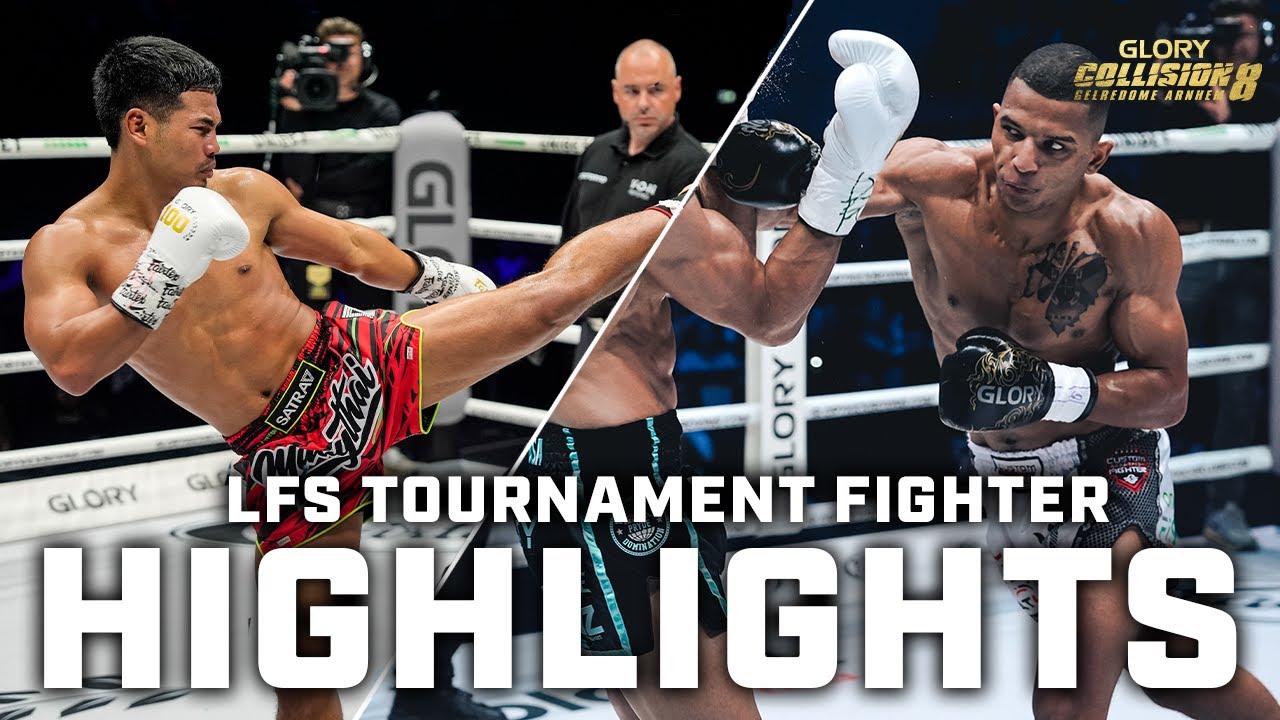
As the competitive year draws to a close, the world of kickboxing pivots to Arnhem for the GLORY Collision 8 event. This is not merely a standard fight card; it is a structured, high-stakes spectacle designed to finalize several divisional hierarchies before the calendar turns. The entire event is engineered around the elimination principle, demanding peak performance from every competitor across three primary weight classes.
The Heavyweight Wildcard: Immediate High Stakes
The top tier of the card focuses intensely on the Heavyweight division, utilizing the `Last Heavyweight Standing Wildcard` format to introduce maximum jeopardy right out of the gate. This structure effectively places established contenders against dynamic challenges, offering no room for strategic delays.
Main Event Analysis: Plazibat vs. Mahieddine
The headline bout features **Antonio Plazibat** (22-5, 16 KO) facing **Nordine Mahieddine** (29-15, 13 KO). Plazibat arrives with a reputation built on concussive power, evidenced by his substantial knockout rate. This is a crucial assessment of his divisional standing, placing him against the seasoned but less technically predictable Mahieddine. For Plazibat, this fight is a mandate to demonstrate controlled aggression and eliminate any doubt regarding his title aspirations moving into the next cycle.
The Co-Main Event delivers a dose of veteran calculus versus raw momentum: **Errol Zimmerman** (111-20-1, 44 KO) takes on **Alex Simon** (1-0, 1 KO). Zimmerman`s record is a historical archive of the sport—a massive volume of fights and knockouts. His inclusion suggests GLORY is capitalizing on his enduring presence, though his performance must now justify the legacy against the nascent career of Simon, who arrives virtually unblemished and hungry. This pairing is less about competitive equilibrium and more about proving whether the foundation of experience can withstand the shock of fresh, desperate talent.
The Tournament Crucible: Two Divisions, One Night
The most demanding aspect of Collision 8 is the inclusion of simultaneous one-night tournaments for the Welterweight and Light Heavyweight divisions. Competing in both a semi-final and, potentially, a final within hours requires extraordinary conditioning and damage management. This format ruthlessly tests depth, recovery rate, and strategic energy conservation—a scenario where technical genius often loses to sheer durability.
Welterweight Bracket Integrity
The Welterweight bracket is densely competitive. The semi-finals pit highly respected figures against emerging threats:
- **Semi-Final 1:** Endy Semeleer (38-3, 18 KO) vs. Don Sno (7-2, 3 KO). Semeleer is the clear favorite based on experience and finishing capability, but the tournament structure means fatigue is the ultimate equalizer.
- **Semi-Final 2:** Chico Kwasi (45-5-2, 23 KO) vs. Teodor Hristov (18-4, 7 KO). Kwasi’s extensive record and higher volume of fights give him a psychological edge, but Hristov represents a tough, reliable obstacle designed to drain resources.
The winner of these bouts proceeds immediately to the C8 Welterweight Tournament Final, requiring two flawless performances to secure the divisional mandate.
Light Heavyweight: Technical Depth Tested
The Light Heavyweight tournament introduces several high-level competitors, setting the stage for genuinely difficult technical pairings:
- **Semi-Final 1:** Milos Cvjeticanin (16-4, 9 KO) vs. Cem Caceres (19-2, 14 KO). Caceres’s higher knockout percentage suggests aggressive intent, potentially forcing a quick, decisive action.
- **Semi-Final 2:** Michael Boapeah (21-5-1, 9 KO) vs. Artem Vakhitov (22-7, 8 KO). Vakhitov’s presence introduces significant prestige. His tactical ability means Boapeah must rely on precision and relentless pace rather than simple brute force.
As with the Welterweights, the winners advance to the final, where strategy established in the first fight must be rapidly adjusted to handle the opponent who survived the other side of the bracket.
Featherweight and Reserve Bouts: Ensuring Bracket Continuity
Beyond the main tournament frameworks, GLORY Collision 8 includes several crucial single bouts and reserve fights, demonstrating an appreciation for divisional continuity and providing contingency measures should a tournament fighter be unable to proceed.
The Featherweight division sees compelling matchups featuring international talent known for high fight volumes:
- **Petch** (174-40-3, 27 KO) vs. Dennis Wosik (40-9-1, 9 KO). Petch’s record is staggering—a testament to longevity and consistent performance at the elite level, setting up a clash of styles against the durable Wosik.
- Miguel Trindade (63-8, 26 KO) vs. Bobo Sacko (79-6-1, 30 KO).
Reserve bouts—such as Antonio Krajinovic vs. Figuereido Landman (Welterweight) and Iuri Fernandes vs. Ismael Lazaar (Light Heavyweight)—are designed to maintain the integrity of the elimination structure. While these fighters may not headline, their preparedness is paramount, as a sudden substitution can dramatically alter the dynamics of a final round.
GLORY Collision 8 stands as a meticulous piece of matchmaking, prioritizing definitive results through elimination and immediate consequence. For the city of Arnhem, it is a demanding end-of-year spectacle, where only the most adaptable and resilient fighters will leave with their divisional standing secured.