
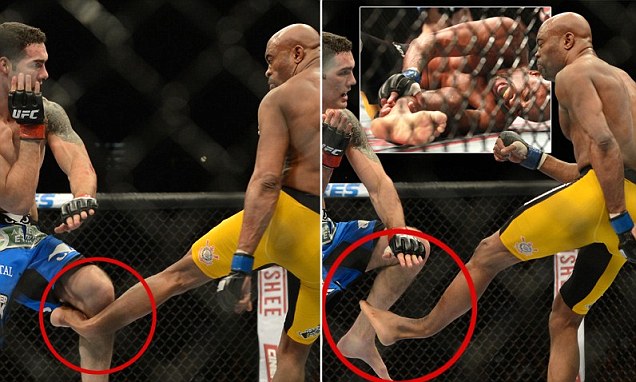
The night of December 28, 2013, remains permanently etched in mixed martial arts history, a stark intersection of overwhelming triumph and agonizing tragedy. UFC 168 was designed as the immediate rematch for the UFC Middleweight Championship between the seemingly unstoppable legend, Anderson “The Spider” Silva, and the man who dethroned him, Chris Weidman.
Silva’s previous loss had ended his historic title reign—a 17-fight winning streak that spanned nearly seven years. The pressure to reclaim his crown was immense, yet nobody present in the MGM Grand Garden Arena could have predicted the sheer visceral horror that would unfold early in the second round.
The Anatomy of Disaster: The Kick That Changed Everything
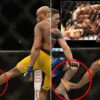
Seeking to regain the momentum lost in the first fight, Silva launched a powerful, yet ill-fated, low leg kick directed at Weidman`s lead leg. In a moment of technical brilliance—or perhaps cold, hard luck—Weidman checked the kick perfectly. The collision was instant, audible, and devastating. Silva`s left leg, specifically the tibia and fibula, snapped in a manner that immediately earned it a place among the worst injuries ever witnessed in professional sports.
As the former champion collapsed, clutching the ruined limb, the fight was waved off. The atmosphere shifted instantly from charged anticipation to stunned silence and widespread concern. Silva, the greatest striker the sport had ever seen, was being stretchered out of the Octagon, his career seemingly over and his physical condition critically compromised.
The Pre-Operative Assessment of an Unbroken Mind
The journey from the Octagon to the operating theater is usually a blur of pain management, shock, and grim reflection for an athlete facing such trauma. Emergency surgery was required immediately to implant an intramedullary rod into Silva`s tibia. This procedure was carried out by the UFC’s orthopedic surgeon, Dr. Steven Sanders.
In the high-stakes, high-stress environment of the pre-operative area, Dr. Sanders prepared for a complex repair job on one of the world`s most valuable athletic machines. He might have expected questions regarding the pain, the prognosis for walking, or the long-term quality of life.
Instead, Silva demonstrated a psychological fortitude that transcended the physical devastation. According to Dr. Sanders, the immediate and singular focus of the downed champion was purely technical and almost jarringly professional. Silva was not mourning his loss or the break; he was calculating his next move.
“In the pre-op area, his questions were, ‘When can I train?’”
This single, blunt question—asked while still reeling from a fracture that would incapacitate a normal person for months of basic movement—perfectly encapsulated the relentless mindset of an elite competitor. For Silva, the injury was merely a technical delay, a scheduled maintenance stop, not a definitive career barrier. The surgeon`s revelation speaks volumes about a level of mental toughness that distinguishes icons from mere champions.
The Long Road Back and Enduring Legacy
Thirteen months after the clinical reconstruction of his leg, Anderson Silva did indeed return to the cage, fighting Nick Diaz. While that result was eventually overturned due to a failed drug test—a controversial footnote in his legacy—the fact that he physically recovered and competed at the highest level so quickly was a testament to his determination and the success of the surgical intervention.
Even now, at an age where most legendary fighters are long retired and comfortably recounting war stories, Silva continues to defy conventional boundaries. Having transitioned successfully into professional boxing, “The Spider” shows no sign of stopping. His knockout victory over former UFC star Tyron Woodley proved that his competitive fire, first glimpsed in that chilling question to the surgeon, still burns fiercely.
This persistence has made him a target for the next generation of combat sports athletes. Yoel Romero, another legendary figure known for his explosive power and longevity, has recently called Silva out for a boxing match, claiming Silva is looking for the wrong opponents.
Whether Silva faces Chris Weidman in a rearranged boxing clash in 2026, or accepts the challenge from Yoel Romero, the narrative remains the same: the legend is still competing. His toughness is not measured by the number of successful strikes he landed, but by the clinical focus he maintained, even when his body was literally in pieces. That question—“When can I train?”—was not a plea; it was a firm scheduling directive from a man who understands that in combat sports, the mind breaks long before the bone does.